

The Hidden Cost of Cheap Bearings: 2026 TCO Guide
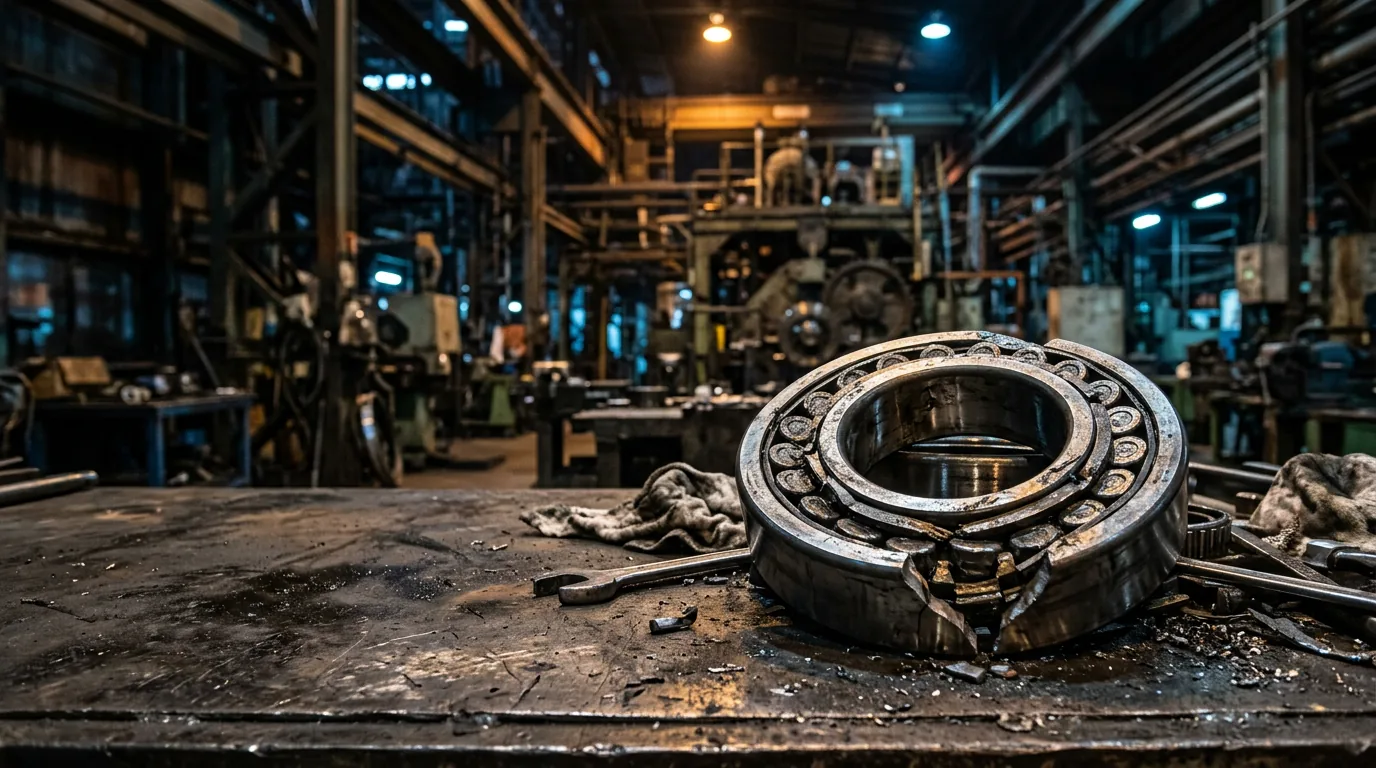
The hidden cost of a cheap bearing is its Total Cost of Ownership (TCO), where unplanned downtime and lost production hours can exceed the initial purchase price by 100 times. A bearing might cost you fifty thousand Rupees, but the subsequent failure costs you fifty million. In heavy-load Pakistani industries like crushers, sugar mills, and textile plants, calculating the true cost means looking beyond the sticker price to the catastrophic financial impact of halted production and emergency labor. This guide explains how to calculate bearing TCO and why investing in high-quality, heat-treated bearings is the only reliable way to protect your manufacturing ROI.
What is the real cost of a cheap bearing failure?
The real cost of a cheap bearing failure is the catastrophic financial impact of unplanned machine downtime, emergency maintenance labor, and halted production lines, which routinely dwarf the initial sticker savings. In high-load Pakistani industries like sugar mills, textile plants, and stone crushers, a substandard spherical roller bearing can fail within 24 hours, causing massive financial losses.
Understanding this requires a strict Total Cost of Ownership (TCO) calculation. The sticker price of a low-grade bearing is completely negligible compared to the operational hit of a sudden breakdown. In typical manufacturing and heavy industrial environments, each unplanned hour of machine downtime commonly destroys between $125,000 and $500,000[1][2][3]. With an industry-validated average around $260,000 per hour[4][5], saving a few thousand Rupees on a cheap component is a severe financial risk that no plant manager should take.
To evaluate the true expense accurately, industrial buyers must calculate the industrial bearing total cost of ownership guide using these core TCO factors:
| TCO Factor | Financial Impact | Why It Inflates Cost |
|---|---|---|
| Unplanned Downtime | $125,000–$500,000 per hour[1][2] | Entire production lines halt; overhead costs continue while output drops to zero. |
| Lost Production | Massive revenue deficit | Missed delivery targets, ruined raw materials (e.g., in sugar mills), and lost contracts. |
| Emergency Labor | High overtime rates | Maintenance teams must drop scheduled work to perform reactive, emergency replacements. |
| Collateral Damage | Secondary component costs | A shattered bearing often damages shafts, housings, and adjacent machinery. |
When a cheap bearing shatters under a heavy load, the downtime clock starts ticking immediately. The initial fifty thousand Rupee saving vanishes the moment the production line stops. For heavy-load applications, prioritizing reliability over the lowest upfront price is the only way to protect profitability.
Why do cheap bearings fail prematurely under heavy industrial loads?
Cheap bearings fail prematurely under heavy industrial loads because their low-grade carbon steel construction cannot withstand the extreme mechanical stress and thermal expansion generated by heavy machinery. While normal fatigue accounts for 34 percent of bearing failures, installing cheap carbon steel bearings guarantees premature failure under heavy industrial loads. In demanding applications like stone crushers and iron mills, the material difference between a budget bearing and a premium component dictates the machine's survival.
The primary failure point of a cheap bearing is its metallurgy. Low-cost bearings are often manufactured from unrefined carbon steel that lacks the structural integrity required for high-stress environments. When subjected to the immense radial and axial loads of a sugar mill or the continuous shock loads of a stone crusher, these substandard materials deform, crack, and ultimately shatter. Furthermore, field statistics indicate that less than 30% of bearings in industrial service fail due to normal fatigue at the end of their calculated life[6][7]. Instead, premature failures dominate, heavily exacerbated by poor material tolerance, inadequate heat treatment, and poor lubrication retention.
To eliminate these catastrophic downtime costs, HI-TEC spherical roller bearings are specifically engineered for survival in Pakistan's toughest industrial environments.
- High-Temperature Heat Treatment: HI-TEC bearings undergo advanced heat treatment to withstand extreme operating temperatures without losing dimensional stability.
- Superior Alloy Composition: Unlike brittle carbon steel, premium alloys absorb heavy shock loads and resist micro-cracking under continuous stress.
- Self-Aligning Geometry: Spherical roller designs accommodate the shaft deflection and misalignment common in heavy-duty crushers and textile machines.
- Optimized Load Distribution: The internal geometry is precision-engineered to carry massive radial loads, preventing the localized stress spikes that destroy cheap alternatives.
Frequently Asked Questions
What is the real cost of a bearing failure?
The real cost is the Total Cost of Ownership (TCO), which includes the catastrophic expense of unplanned machine downtime, emergency maintenance labor, and lost production. An hour of heavy industrial downtime can cost up to $500,000[1][2], making the initial purchase price of the bearing irrelevant.
Are cheap bearings worth it?
No. While a cheap bearing offers a lower upfront sticker price, it guarantees premature failure in high-load applications. The resulting downtime and collateral damage to shafts and housings will cost exponentially more than investing in a high-quality, heat-treated bearing from the start.
Why do bearings fail prematurely under heavy loads?
Bearings fail prematurely when their material construction—such as low-grade carbon steel—cannot withstand extreme mechanical stress and thermal expansion. Inadequate heat treatment leads to rapid deformation, cracking, and catastrophic failure under the immense loads of industrial crushers and mills.
How much does machine downtime cost?
In typical manufacturing and heavy industrial environments, unplanned downtime averages around $260,000 per hour[4][5]. Depending on the sector, these costs can range from $125,000 to over $500,000 per hour[1][2][3] due to halted production lines, ruined materials, and emergency repair expenses.
References
- Industrial downtime costs up to $500,000 per hour and can ... - ABB. https://new.abb.com/news/detail/129763/industrial-downtime-costs-up-to-500000-per-hour-and-can-happen-every-week (2025-10-14)
- Unplanned Downtime Cost (2026 Updated): 55+ Data Points. https://www.info2soft.com/blogs/unplanned-downtime-cost-2026-updated.html (2026-05-14)
- The Monthly Metric: Unscheduled Downtime. https://www.ismworld.org/supply-management-news-and-reports/news-publications/inside-supply-management-magazine/blog/2024/2024-08/the-monthly-metric-unscheduled-downtime/ (2024-08-27)
- Average Cost of Downtime per Industry - pingdom.com. https://www.pingdom.com/outages/average-cost-of-downtime-per-industry/ (2023-01-09)
- Manufacturing Downtime: Definition, Stats & More - TWI Institute. https://www.twi-institute.com/manufacturing-downtime/ (2023-08-09)
- What Causes Bearing Failures and Preventative Measures You .... https://www.bdsbearing.com/blog/bearing-failures (2020-07-30)
- A review of bearing failure Modes, mechanisms and causes. https://www.sciencedirect.com/science/article/abs/pii/S1350630723004727 (2025-09-29)