

Smart Bearings & IoT: Transforming Predictive Maintenance in Industry 4.0
Smart Bearings & IoT: Transforming Predictive Maintenance in Industry 4.0
The manufacturing landscape is undergoing a profound transformation, driven by the principles of Industry 4.0. At the heart of this revolution lies the integration of advanced technologies, with smart bearings and IoT bearings emerging as critical components for next-generation predictive maintenance strategies. This shift is not merely about digitizing existing processes; it's about fundamentally changing how we monitor, manage, and maintain industrial assets, moving from reactive fixes to proactive, data-driven interventions.
For maintenance engineers, procurement managers, and plant managers in industrial manufacturing, understanding this evolution is paramount. The ability to anticipate equipment failure before it occurs can drastically reduce costly downtime and optimize operational efficiency. HI-TEC BEARINGS is at the forefront of this change, providing the precision bearings and technical expertise needed to implement these innovative solutions.
This article explores how IoT sensors are enabling a new era of condition monitoring, detailing the benefits for industries, particularly highlighting the opportunities for manufacturing technology Pakistan to thrive in a globally competitive environment.
Industry 4.0 and Smart Bearings - A New Era for Manufacturing
Industry 4.0 represents the fourth industrial revolution, characterized by the convergence of digital and physical technologies to create intelligent, interconnected systems. This paradigm shift encompasses the Internet of Things (IoT), artificial intelligence (AI), machine learning (ML), and cloud computing, all working in concert to enhance productivity, flexibility, and efficiency across industrial operations. A key tenet of Industry 4.0 is the concept of the 'connected asset,' where machinery communicates its status in real time, enabling unprecedented levels of control and insight.
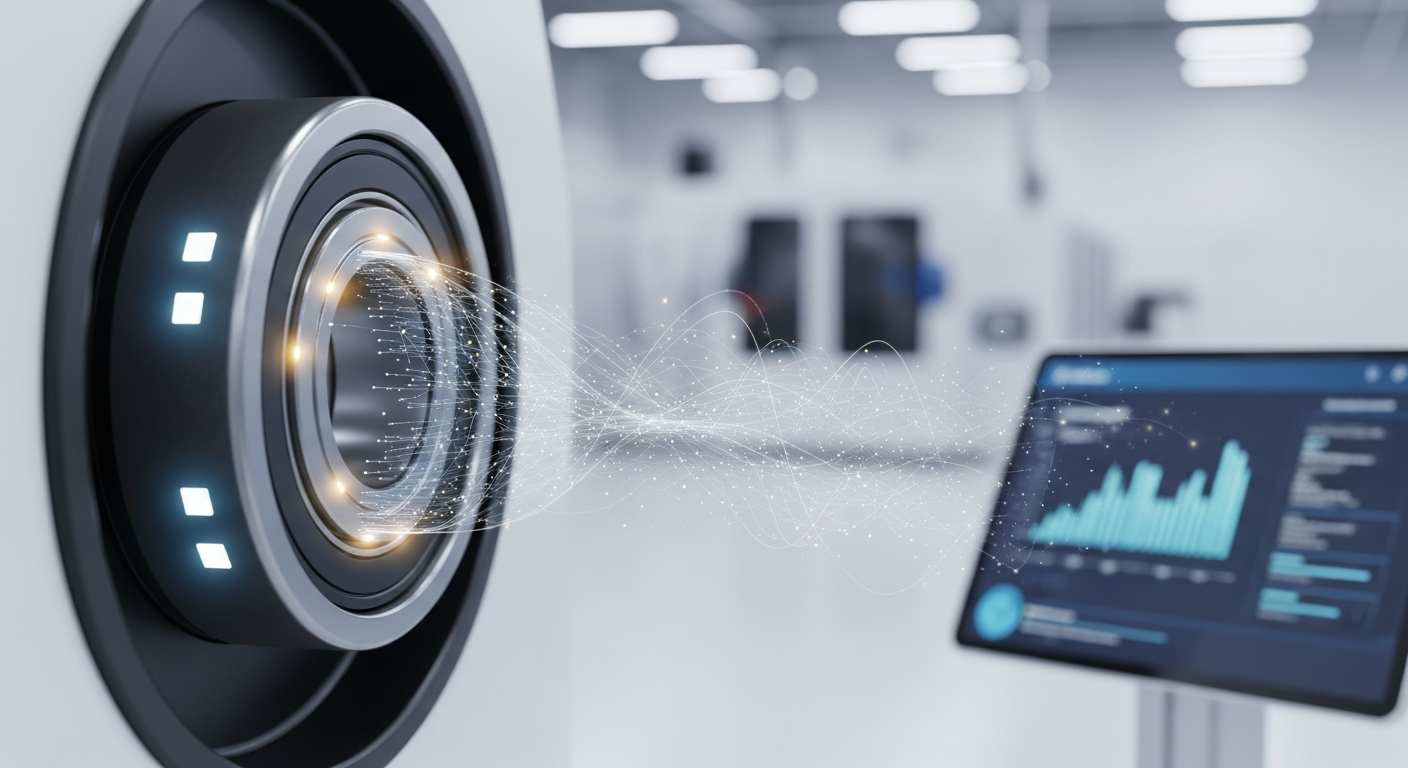
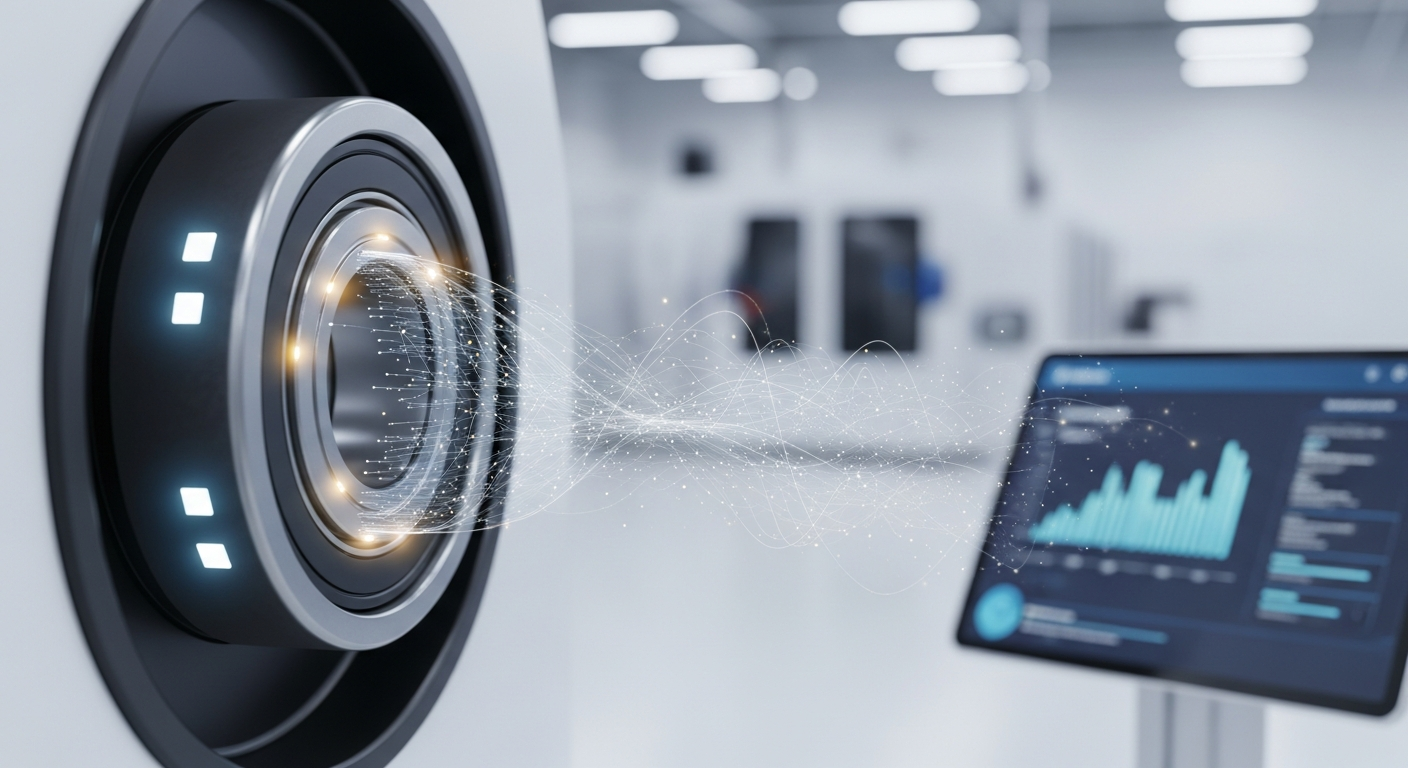
Within this framework, smart bearings are not just components; they are intelligent data nodes. Traditional bearings fulfill their mechanical function, but smart bearings go a step further by integrating or being paired with advanced IoT sensors. These sensors transform a passive mechanical part into an active data source, providing continuous insights into its operational health. This integration is crucial because bearings are high-wear components found in virtually all rotating equipment – from electric motors and gearboxes to pumps and conveyors. Their failure can often lead to catastrophic and expensive damage to the entire system.
By embedding sensing capabilities directly into the bearing or mounting them externally, we can monitor critical parameters such as vibration, temperature, and load with precision. This real-time data stream feeds into sophisticated analytics platforms, making predictive maintenance not just a possibility, but a practical and highly effective strategy. This proactive approach helps avoid the estimated $50 billion per year that industries lose due to unplanned downtime, as cited by Deloitte. For manufacturers looking to embrace the future of industrial operations, understanding and implementing smart bearing technology is a foundational step in harnessing the full potential of Industry 4.0. To delve deeper into this transformative shift, explore The Industry 4.0 Revolution: Why Predictive Maintenance with Smart Bearings & IoT Bearings Is the Future of Manufacturing Technology Pakistan. HI-TEC BEARINGS is proud to supply the advanced bearing solutions that power this new era.
How IoT Sensors Transform Bearing Monitoring and Data Collection
The true intelligence of smart bearings lies in their ability to collect and transmit vast amounts of data using IoT sensors. These tiny, yet powerful, devices are the eyes and ears of the predictive maintenance system, continuously monitoring the bearing's condition. The types of sensors commonly employed include accelerometers for vibration analysis, thermocouples for temperature monitoring, and strain gauges for load measurement. Each sensor captures specific data points that are indicative of bearing health and potential issues.
Vibration sensors, for example, can detect subtle changes in frequency and amplitude that signal misalignment, unbalance, or developing defects within the bearing races or rolling elements. Temperature sensors are vital for identifying overheating, which can indicate excessive friction, lubrication breakdown, or impending failure. Load sensors provide insight into whether the bearing is operating within its design limits, preventing premature wear due to overloading. Beyond these, some advanced IoT bearings may incorporate acoustic sensors for anomaly detection or even embedded lubrication quality sensors.
This continuous stream of data, often collected wirelessly, is then transmitted to a central analytics platform. Unlike traditional periodic inspections, which offer only snapshots of health, IoT bearings provide a continuous, high-resolution picture of the bearing's operational state. Deloitte highlights that sensor types such as temperature, vibration, ultrasound, and conductivity are key inputs for translating physical asset behavior into digital signals. For smart bearings, vibration and temperature are especially important as they often show early signs of misalignment, lubrication problems, contamination, and wear. This constant monitoring allows for the detection of nascent issues long before they escalate into critical failures, forming the backbone of effective predictive maintenance strategies. Our team at HI-TEC BEARINGS provides technical support to help integrate these sophisticated monitoring systems with our range of high-performance bearings.
Predictive Maintenance with Smart Bearings - Reducing Downtime
The transition from traditional maintenance approaches to predictive maintenance using smart bearings marks a significant leap forward in operational efficiency. Historically, industries relied on reactive maintenance, fixing equipment only after it broke down, leading to costly unplanned downtime and production losses. Preventive maintenance improved upon this by scheduling maintenance at fixed intervals, but often resulted in unnecessary parts replacement or maintenance being performed too late, just before a failure.
IoT bearings, however, enable a truly proactive strategy. By continuously monitoring critical parameters, these intelligent components provide real-time data that, when analyzed using AI and machine learning, can accurately predict when a bearing is likely to fail. This allows maintenance teams to schedule interventions precisely when needed, during planned downtime, before any breakdown occurs. SensFlo reports that predictive maintenance programs can reduce unplanned downtime by 30-50% and lower maintenance costs by 10-25%. These figures underscore the substantial return on investment for adopting such technologies.
Consider the impact: instead of a sudden, catastrophic failure halting an entire production line, maintenance engineers receive an alert indicating a developing issue in a specific bearing. They can then procure the necessary parts, schedule a repair during a weekend shutdown, and replace the component before it causes any disruption. This minimizes emergency repairs, reduces spare parts inventory, and extends the lifespan of machinery. Synox notes that predictive maintenance is about acting before a breakdown occurs, reducing the cost of interventions compared with emergency repair. This is especially valuable for bearings, since a small issue like lubrication loss can lead to major secondary damage if ignored. Our technical team at HI-TEC BEARINGS understands the critical role of bearing health in preventing such issues and offers expert guidance on optimizing maintenance schedules. For more insights on proactive maintenance, consider reading The Ultimate Bearing Maintenance Guide for the Textile Industry: How Proper Lubrication Powers Bearing Failure Prevention for Industrial Maintenance Pakistan.
Boosting Efficiency and Competitiveness for Pakistani Manufacturers
For Pakistani manufacturers, embracing IoT bearings and predictive maintenance is not just about adopting new manufacturing technology Pakistan; it is a strategic imperative for global competitiveness. In an increasingly interconnected world, efficiency and reliability are key differentiators. Unplanned downtime, high maintenance costs, and inefficient production cycles can severely hinder a company's ability to compete on the international stage.
Implementing smart bearings allows Pakistani industries, from textiles and cement to automotive and food processing, to significantly reduce operational risks and costs. By preventing unexpected machine failures, production schedules become more reliable, leading to improved delivery times and enhanced customer satisfaction. This translates directly into a stronger market position. Moreover, the data collected from IoT bearings can reveal deeper insights into machine performance, enabling optimization of operational parameters and further efficiency gains. HI-TEC BEARINGS works closely with local manufacturers to identify suitable bearing solutions that integrate seamlessly with their existing infrastructure, providing both the cutting-edge products and the technical support required for successful implementation.
The initial investment in smart bearings and predictive maintenance systems yields substantial long-term benefits. Deloitte notes that poor maintenance strategies can reduce an asset's productive capacity by 5% to 20%. By reversing this trend, Pakistani manufacturers can unlock significant untapped capacity. This adoption of advanced manufacturing technology Pakistan not only improves individual company performance but also elevates the overall industrial landscape of the nation, fostering innovation and attracting further investment. Our team is dedicated to helping local industries navigate this technological shift, ensuring they have access to the best bearing solutions and expert advice.
Key Considerations for Implementing Smart Bearing Systems
While the benefits of smart bearings and predictive maintenance are clear, successful implementation requires careful consideration of several key factors. The journey towards an Industry 4.0 enabled factory involves more than just purchasing new components; it necessitates a holistic approach to technology integration, data management, and operational change.
One primary challenge is data integration. IoT bearings generate a continuous stream of data, which must be collected, transmitted, stored, and analyzed effectively. This often requires robust industrial IoT platforms, cloud infrastructure, and seamless integration with existing enterprise resource planning (ERP) or computerized maintenance management systems (CMMS). Ensuring compatibility and interoperability across different systems is crucial. Another significant concern is cybersecurity. As more operational technology (OT) systems become connected to the internet, they become potential targets for cyber threats. Robust security protocols, encryption, and network segmentation are essential to protect sensitive production data and prevent malicious attacks.
Furthermore, the initial investment costs for smart bearings, sensors, software, and training can be a barrier for some organizations. However, it is vital to view this as a strategic investment with a high return, given the significant reductions in unplanned downtime and maintenance expenses. The predictive maintenance market itself is growing rapidly, projected to reach USD 97.37 billion by 2034, indicating a clear trend towards increased adoption. Staff training is also critical; maintenance teams need to develop new skills in data analysis, sensor technology, and software operation. HI-TEC BEARINGS offers technical bearing selection support and failure analysis expertise, helping clients overcome these hurdles and maximize the value of their investment in manufacturing technology Pakistan.
The Future of Industrial Maintenance with Smart Bearings
The trajectory of smart bearings and predictive maintenance within Industry 4.0 points towards an increasingly autonomous and self-optimizing industrial future. The current focus on condition monitoring and prediction is just the beginning. The next frontier involves deeper integration of artificial intelligence (AI) and advanced analytics, moving beyond simply predicting failures to prescribing optimal actions.
AI and machine learning algorithms are becoming standard for failure prediction, analyzing vast volumes of sensor data to identify intricate patterns and predict degradation with increasing accuracy. This shift from simple threshold alarms to pattern recognition and anomaly detection is more effective for complex rotating assets like those relying on our spherical roller bearings or cylindrical roller bearings. The trend is towards more sensors, better connectivity, and longer history, which improves model accuracy and reduces false positives, as stressed by VROC AI and Nortech Systems. This means future IoT bearings will not only alert to potential issues but will also suggest the most efficient repair methods, recommend optimal lubrication schedules, or even trigger autonomous adjustments in machine operation to mitigate wear.
The long-term vision is prescriptive maintenance, where systems not only detect bearing issues but also recommend the best action and timing. This could involve automated ordering of replacement parts, scheduling technician visits, or even directly interfacing with production planning systems to adjust output based on asset health. The global predictive maintenance market's projected growth to nearly $100 billion by 2034 underscores this inevitable future. HI-TEC BEARINGS remains committed to being a partner in this evolution, providing the technical expertise and advanced bearing solutions that empower Pakistani industries to achieve a truly smart and resilient manufacturing ecosystem.
Frequently Asked Questions
What is the main difference between smart bearings and traditional bearings?
The primary difference is that smart bearings integrate or are paired with IoT sensors to collect real-time data on their condition, such as temperature, vibration, and load. Traditional bearings are purely mechanical components that do not provide active feedback on their operational health, requiring manual inspection or reactive maintenance.
How do IoT bearings help reduce unplanned downtime?
IoT bearings continuously monitor critical parameters, sending data to an analytics platform where AI and machine learning predict potential failures before they occur. This allows maintenance teams to schedule repairs proactively during planned downtime, preventing sudden breakdowns and significant production losses.
Is adopting smart bearing technology feasible for small to medium-sized manufacturers in Pakistan?
Yes, while there's an initial investment, the long-term benefits of reduced downtime, lower maintenance costs, and increased efficiency make it highly feasible and beneficial. Many solutions are scalable, allowing manufacturers to start with critical assets and expand. HI-TEC BEARINGS offers technical support to help integrate these solutions cost-effectively.