

Industrial Bearings Pakistan: The Price Trap of 2026
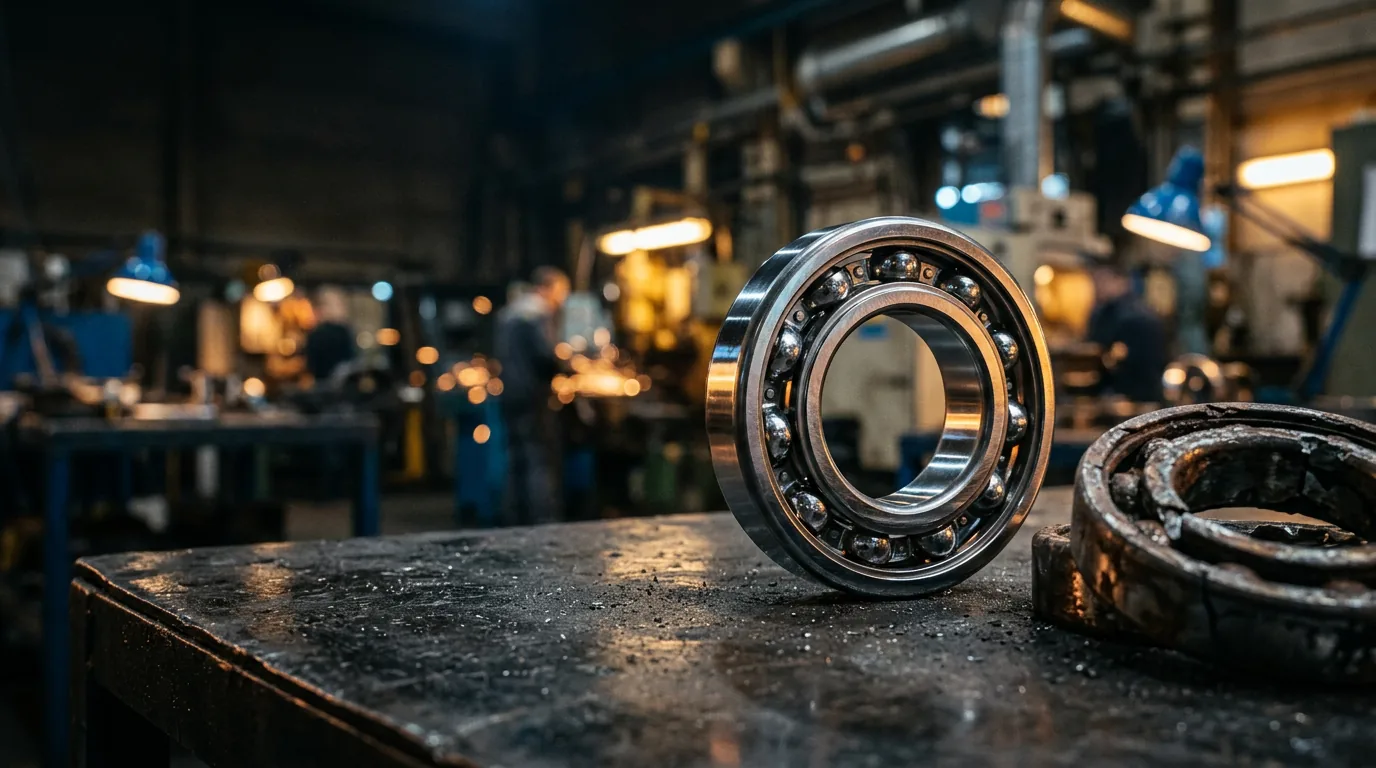
Everyone's selling the cheapest bearing, but nobody's asking what got removed. The industrial bearings Pakistan market is trapped in a price-first cycle where importers secretly substitute high-grade steel for cheaper materials to artificially lower costs. Purchasing a branded bearing at 30 to 50 percent below the standard distributor price is a near-guaranteed indicator of a counterfeit or compromised product. This price-first competition hides quality cuts that the buyer ultimately pays for through catastrophic downtime and repeated replacements.
HI-TEC Bearings was established to eliminate the inconsistent quality of local imports by enforcing strict quality control and guaranteeing a reliable supply of industrial bearings. This guide breaks down the hidden material substitutions used by importers, the true cost of bearing failure, and how prioritizing quality protects your machinery.
Why do cheap industrial bearings in Pakistan fail so quickly?
Many low-cost bearings are manufactured using inferior carbon steel instead of genuine GCr15 chrome steel, leading to micro-cracks and catastrophic failure within weeks. Purchasing a branded bearing at 30 to 50 percent below the standard distributor price is a near-guaranteed indicator of a counterfeit or compromised product. The difference lies entirely in the metallurgy, which dictates load capacity and fatigue life.
Genuine GCr15 is a high-carbon chromium bearing steel that accounts for more than 80% of bearing steel used worldwide because of its exceptional fatigue life[1]. It achieves a surface hardness of HRC 60–66, which underpins its wear resistance and rolling contact fatigue strength[2][3][4]. In contrast, cheap "carbon steel" bearings use lower-alloy steels intended for commercial components, lacking the purity required for industrial loads[5]. Bearings made from these softer materials exhibit load capacities that are at least 20% lower than genuine chrome steel bearings of the same size[3][5].
This material substitution drastically alters how the bearing fails. A genuine GCr15 bearing fails predictably through subsurface fatigue spalling after millions of cycles[6][4]. A cheap carbon steel bearing is prone to rapid abrasive wear, plastic deformation, and early fatigue cracking at much lower loads[5]. For a detailed breakdown, review our cheap vs quality bearings comparison.
| Specification | Genuine GCr15 Chrome Steel | Cheap Carbon Steel |
|---|---|---|
| Material Quality | High-carbon chromium bearing steel[2] | Generic low/medium carbon alloy[5] |
| Surface Hardness | HRC 60–66[2][3] | Significantly lower[5] |
| Load Capacity | 100% (Baseline rating)[5] | ~20% lower[3][5] |
| Primary Failure Mode | Predictable subsurface spalling[6][4] | Rapid wear, plastic deformation, early cracking[5] |
What is the real cost of bearing failure and how do you avoid it?
The industrial bearing market in Pakistan is trapped in a price-first cycle where importers secretly substitute high-grade steel for cheaper materials, but the initial purchase price represents only about 10% of a bearing's total cost of ownership (TCO)[7][8]. HI-TEC Bearings was established to eliminate the inconsistent quality of local imports by enforcing strict quality control and guaranteeing a reliable supply of industrial bearings.
When a cheap bearing fails prematurely, the resulting machine downtime dwarfs the initial savings. Unplanned downtime costs manufacturers between $8,000 and $22,000 per hour, and can easily exceed $50,000 per hour in high-volume plants[9]. Because emergency repairs cost three to five times more than planned maintenance[9], a minor component failure rapidly escalates into a major financial loss. The true cost of ownership includes lost production revenue, idle labor, fixed overhead, and emergency repair expenses[9].
To avoid these catastrophic costs, procurement must shift to a reliability-first framework. Evaluating bearings based on TCO ensures that machinery remains operational and profitable.
- Initial Purchase Price: Represents less than 10% of the total cost of ownership[7][8]. Saving a few rupees upfront frequently triggers massive downstream expenses.
- Downtime Costs: A single hour of lost production routinely costs between $8,000 and $22,000[9]. Reliable bearings prevent these devastating operational halts.
- Replacement Frequency: Cheap bearings fail faster, multiplying labor and replacement costs. Upgrading to a quality bearing reduces lifetime costs dramatically by avoiding repeated failures[10].
- Lubrication Reliability: Approximately 54% of bearing failures are lubrication-related[11][12]. Quality bearings paired with proper maintenance schedules reduce unexpected breakdowns.
Frequently Asked Questions
Are cheap bearings worth it?
No. The initial purchase price of a bearing represents less than 10% of its total cost of ownership[7][8]. Cheap bearings, often made from inferior carbon steel, fail prematurely and trigger emergency repair costs that are three to five times higher than planned maintenance[9][5].
What is the real cost of a bearing failure?
The real cost is driven by machine downtime, which typically ranges from $8,000 to $22,000 per hour in manufacturing environments[9]. A single catastrophic bearing failure can cost tens of thousands of dollars in lost production, emergency labor, and scrapped materials.
Why do cheap bearings fail so quickly?
Many low-cost bearings are manufactured using generic carbon steel instead of genuine GCr15 chrome steel[5]. This inferior material has a lower surface hardness and a load capacity that is at least 20% lower than standard bearing steel, resulting in rapid wear, plastic deformation, and early cracking[3][5].
What is the difference between local and imported bearings in Pakistan?
The local market is flooded with low-cost imports where high-grade steel is secretly substituted for cheaper materials to artificially lower prices. Purchasing a branded bearing at 30 to 50 percent below the standard distributor price is a near-guaranteed indicator of a counterfeit or compromised product.
References
- Bearing Steel - an overview | ScienceDirect Topics. https://www.sciencedirect.com/topics/engineering/bearing-steel
- GCr15 bearing steel comprehensive guide | NYZ. https://nyzbearing.com/gcr15-bearing-steel-comprehensive-guide/ (2025-11-22)
- Bearing Material Grade & Composition - AST Bearings. https://www.astbearings.com/bearing-materials.html (2023-06-11)
- Bearing Steel: Comparison with Other Materials and Application. https://iskbearing.com/news/knowledge/understanding-bearing-steel-comparison-with-other-materials-and-application-analysis (2024-11-11)
- How Different Bearing Materials Can Impact Usage - Consolidated. https://consbrgs.com/how-different-bearing-materials-can-impact-usage/ (2021-10-19)
- Steels for Bearings - Phase Transformations and Complex Properties. http://www.phase-trans.msm.cam.ac.uk/2011/Bearings/index.html (2026-06-24)
- Essential Guide To Rolling Bearing Total Cost Of Ownership. https://www.processindustryinformer.com/essential-guide-rolling-bearing-total-cost-ownership/ (2017-03-01)
- Total Cost of Ownership in Maintenance and Reliability Contexts. https://reliabilityx.com/total-cost-of-ownership-in-maintenance-and-reliability-contexts/ (2026-01-18)
- Cost of Unplanned Downtime in Manufacturing: How to Calculate .... https://www.innovapptive.com/blog/cost-of-unplanned-downtime-in-manufacturing (2026-04-30)
- Wind energy LCOE: Bearing purchase price vs. total cost of ownership. https://www.windsystemsmag.com/wind-energy-lcoe-bearing-purchase-price-vs-total-cost-of-ownership/ (2024-11-18)
- The True Cost of Bearing Lubrication - Maintenance World. https://maintenanceworld.com/2016/08/17/true-cost-bearing-lubrication/ (2016-08-17)
- The true cost of bearing lubrication - GlobalSpec. https://insights.globalspec.com/article/13580/the-true-cost-of-bearing-lubrication (2020-02-24)