

How to Read Bearing Numbers: Clearance, Precision & Noise
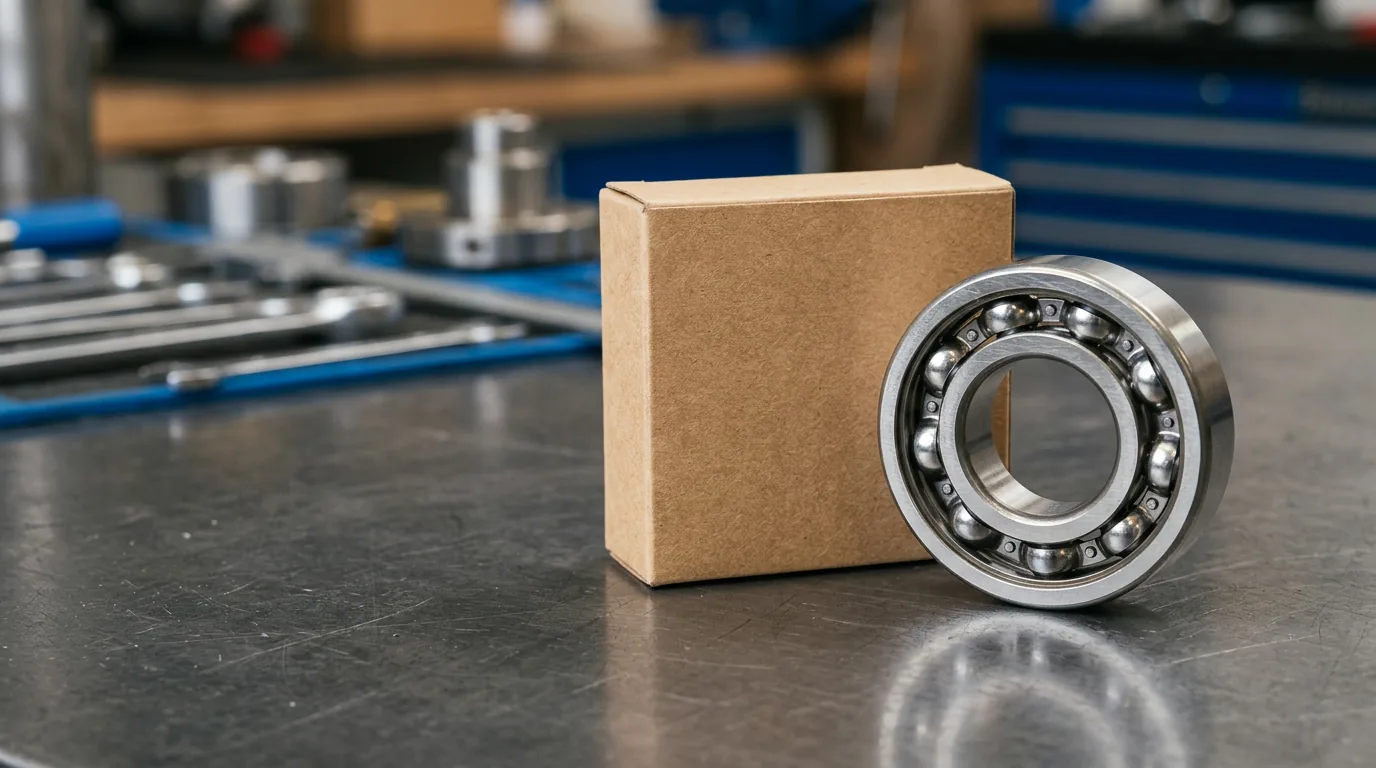
Bearing suffix codes like C3, P6, and Z3V3 indicate internal clearance, manufacturing precision, and noise grade - three critical specifications for matching a bearing to its application. When sourcing a bearing electric motor Pakistan buyers often ignore these alphanumeric codes, assuming they are just technical noise or manufacturer branding. This assumption is a costly mistake that directly leads to premature machinery failure.
Every bearing box carries these codes for a reason. While the basic part number tells you the physical dimensions, the suffix codes dictate how that bearing will behave under load, heat, and high-speed rotation. A standard bearing installed in a high-speed electric motor will rapidly overheat and seize if it lacks the correct internal clearance or precision grade.
This guide breaks down exactly how to read bearing suffix codes. By understanding clearance, precision, and noise grades, industrial buyers and plant managers can stop guessing and start selecting the exact specifications required to keep their equipment running reliably.
How do I read a bearing number and its suffix codes?
You read a bearing number by separating the base number - which dictates physical dimensions like bore and outer diameter - from the suffix codes like C3, P6, and ZV2, which dictate internal clearance, manufacturing precision, and noise grades.
Ignoring these suffix codes when buying bearings in Pakistan often leads to premature equipment failure due to incorrect operating tolerances. Most buyers look at a part number like "6205-2RS C3 P6 ZV2" and only pay attention to the "6205" (size) and "2RS" (seals). They ignore the trailing alphanumeric codes, assuming any bearing that physically fits the shaft will do the job. This is the primary reason why so many industrial motors fail earlier than expected.
Every time a maintenance engineer replaces a bearing but ignores the suffix code, they are resetting the clock on the next failure. The base number only guarantees the bearing will fit the physical space. The suffix codes guarantee it will survive the operating conditions. A bearing designed for a slow-moving conveyor and one designed for a 3,000 RPM electric motor might share the exact same physical dimensions. The difference lies entirely in the suffix codes. These codes are governed by international standards and tell the engineer exactly how the bearing is constructed internally.
When you compare a high-quality bearing against a cheap, low-grade import, the difference is often found in these exact specifications. Premium bearings explicitly state their clearance, precision, and noise grades, ensuring the buyer knows exactly what operating conditions the component can handle. Understanding these three specific codes is the key to preventing catastrophic downtime.
What does bearing clearance C3 mean compared to CN?
CN or C0 indicates minimum clearance for low-noise machines, while C3 and C4 provide extra room for metal expansion in high-speed or high-temperature applications. Internal clearance is the total possible relative movement between rings in radial or axial direction before mounting and under zero load[1].
Faster rotation raises operating temperatures, causing the metal components to expand and demanding more initial internal clearance to prevent seizing. Under ISO standards, radial internal clearance groups are designated C2, CN (normal), C3, C4, and C5[2]. C3 simply means a radial internal clearance greater than normal (CN)[3][4][1].
When a machine operates at high speeds, friction generates heat. This heat transfers into the bearing rings and the rolling elements, causing the steel to physically expand. If the bearing was manufactured with standard CN clearance, this thermal expansion would consume all the internal free space. The rolling elements would then grind against the raceways, leading to rapid overheating, lubricant breakdown, and catastrophic failure. Larger-than-normal clearance allows for this thermal expansion, misalignment, and higher operating temperatures, reducing the risk of excessive preload and early failure[5][6].
| Clearance Code | Meaning | Typical Application |
|---|---|---|
| C2 | Less clearance than normal | High precision, slow rotation, zero vibration |
| CN / C0 | Normal standard clearance | General purpose machinery, low heat |
| C3 | Greater clearance than normal | Electric motors, high-speed pumps, automotive |
| C4 | Greater clearance than C3 | Extreme high-temperature environments |
For most industrial deep groove ball bearings used in demanding applications, C3 is the baseline requirement. It ensures that once the machine reaches its full operating temperature, the bearing has expanded into the perfect operating tolerance, running smoothly and efficiently without seizing.
Which bearing is best for an electric motor in Pakistan?
The best bearing for an electric motor features P6 precision, Z3V3 noise and vibration grades, and C3 internal clearance. The HI-TEC Silver line upgrades standard P0 commercial precision to P6 precision and Z3V3 noise grades, which are mandatory for high-speed electric motors.
When selecting bearings for electric motors, precision and noise grades are just as critical as clearance. Precision classes are standardized across the industry. P0 represents basic commercial precision, offering standard tolerances suitable for general industrial machinery[7][8]. P6 represents a higher precision class with tighter dimensional and running tolerances than P0[9][10][7][11]. For select CNC applications, P5 precision offers even tighter tolerances.
Beyond precision, electric motors require strict vibration and noise controls. Industry standards use V-grades to measure vibration velocity (in µm/s) and Z-grades to measure vibration acceleration and audible noise limits (in decibels)[12]. A standard bearing might have no specific vibration rating, but premium electric motor bearings are strictly graded. For example, a Z3V3 suffix indicates "super silent" vibration velocity limits combined with a higher-performance noise grade[12]. These Z2V2 and Z3V3 grades ensure low-vibration operation that directly extends motor life.
- Precision (P6): Ensures better concentricity and controlled radial runout.
- Vibration Velocity (V3): Guarantees strict limits on structural vibration.
- Noise Grade (Z3): Ensures quiet operation by limiting high-frequency audible noise.
- Clearance (C3): Provides room for thermal expansion.
Choosing a HI-TEC SILVER bearing ensures your electric motor receives the exact P6 precision and Z3V3 noise grades required to prevent premature failure. Contact our technical team via WhatsApp to find the exact specification for your machinery.
Frequently Asked Questions
What does bearing clearance C3 mean?
Bearing clearance C3 means the bearing has a radial internal clearance greater than normal (CN). This extra internal room allows the metal components to expand safely when the bearing heats up during high-speed or high-temperature operation, preventing the bearing from seizing.
How do I read a bearing number?
You read a bearing number by separating the prefix and base number (which determine physical dimensions like bore and outer diameter) from the suffix codes. Suffixes like C3 indicate internal clearance, while codes like P6 and ZV2 indicate manufacturing precision and noise grades.
Which bearing is best for an electric motor?
The best bearing for an electric motor features C3 internal clearance to handle heat expansion, P6 manufacturing precision for high-speed stability, and Z3V3 noise and vibration grades for smooth, quiet operation. The HI-TEC Silver line specifically meets these demanding requirements.
What is the difference between P0 and P6 bearing precision?
P0 represents standard, basic commercial precision suitable for general machinery with moderate speeds. P6 represents a higher precision class with tighter dimensional and running tolerances, making it essential for equipment that requires better concentricity and lower vibration, such as electric motors.
References
- Bearing Clearance Chart: CN, C3, C4 & C5 Explained | TFL. https://tflbearing.com/blog/understanding-the-importance-of-bearing-clearance.html (2021-12-02)
- Bearing data | Schaeffler medias. https://medias.schaeffler.us/en/knowledge-center/rolling-bearings/bearing-data (2026-06-29)
- Bearing Designation Suffixes Explained | PDF - Scribd. https://www.scribd.com/document/414238077/Bearing-Designation-Numbers-Suffex (2025-09-25)
- [PDF] NUMBERING SYSTEM QUICK REFERENCE GUIDE - NTN Canada. https://ntn.ca/wp-content/uploads/2019/10/BearingQuickReferenceGuide-EN-Web.pdf (2024-02-27)
- Understanding C3 Bearing: A Beginner's Guide to Internal Clearance. https://iskbearing.com/news/knowledge/understanding-c3-bearings-an-essential-guide-to-precision-in-machinery (2025-12-11)
- why the C3 bearing is commonly used in MOTOR - Eng-Tips. https://www.eng-tips.com/threads/why-the-c3-bearing-is-commonly-used-in-motor.25141/ (2002-06-13)
- Tolerances - LFD Wälzlager GmbH. https://www.lfd.eu/gb/tolerances.html (2026-06-09)
- Tolerances and tolerance classes for bearings - ジェイテクト. https://koyo.jtekt.co.jp/en/support/bearing-knowledge/7-1000.html (2026-07-03)
- Regarding Bearing Precision and Tolerances | ISK BEARINGS. https://iskbearing.com/news/knowledge/regarding-bearing-precision (2025-12-08)
- Bearing Tolerances and Precision Levels - AST Bearings. https://www.astbearings.com/bearing-tolerances-precision-levels.html (2023-06-11)
- Tolerances | SKF. https://www.skf.com/us/products/rolling-bearings/principles-of-rolling-bearing-selection/general-bearing-knowledge/tolerances
- Bearing Vibration Standards | V1 V2 V3 Noise Limits Chart | ZGBK. https://www.zgbkbearings.com/bearing-vibration-standards/ (2026-01-26)