

Bearing Overheating Causes: 2026 Industrial Guide
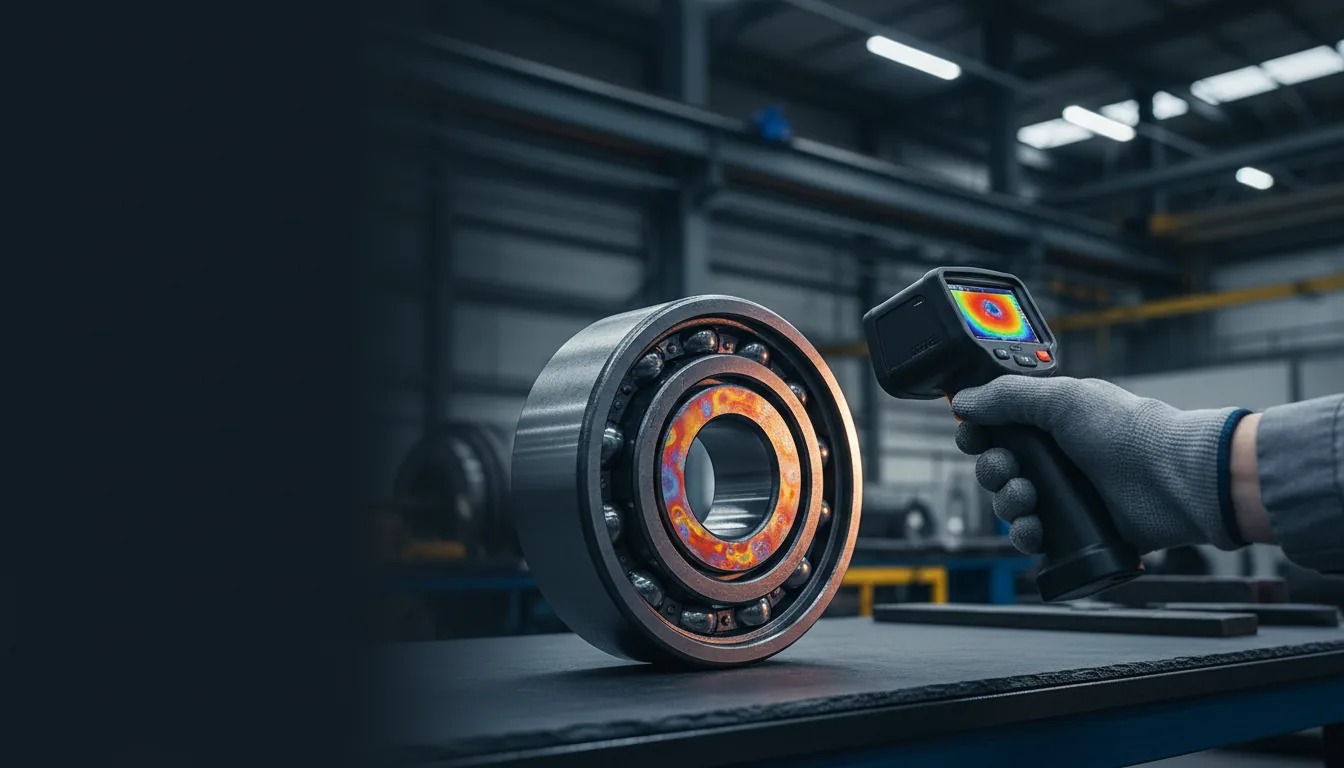
A bearing running hot is not normal under load - it is an early warning sign of incorrect internal clearance, like using C0 instead of C3, or the wrong grade. Internal clearance is application-critical, with C3 and C4 bearings providing the necessary expansion room for high-speed or high-temperature machinery to prevent premature failure. Faster rotation generates higher temperatures, meaning high-speed applications demand greater internal clearance than the standard CN or C0 minimum clearance used for low-noise machines. HI-TEC Bearings Pakistan publishes exact internal clearance specifications for every product, ensuring industrial buyers select the correct bearing that runs cooler and lasts longer.
When a bearing operates, friction naturally occurs at the rolling contact surfaces. However, if the heat cannot dissipate or if the internal clearance is too tight, the resulting thermal expansion consumes the remaining space. This creates a dangerous preload condition that rapidly accelerates wear. Recognizing heat as a diagnostic tool rather than an inevitable byproduct of heavy machinery operation is the first step in extending equipment lifespan across industrial sectors.
Why is my bearing hot under load?
A bearing running hot is not normal under load - it is an early warning sign of incorrect internal clearance, like using C0 instead of C3, or the wrong grade. Under load, bearing temperature rises because friction increases at the rolling contact surfaces as contact pressure between rolling elements and raceways intensifies[1]. If internal clearance is too small, operating heat can consume the running clearance, create preload, and trigger a rapid temperature rise in a self-reinforcing loop[2].
Heat often appears before vibration or noise are obvious. One technical guide notes that early localized damage can be too small to measurably raise overall bearing temperature, but once damage worsens, the temperature rise becomes detectable[3]. Vibration can detect subsurface damage earlier than heat, which means heat is usually a later-than-incipient but still earlier-than-noise warning in many practical cases[4]. A sustained temperature rise of about 10°C above baseline is widely used in plant monitoring as a warning threshold for investigation, even if the absolute temperature is not yet extreme[5].
Some industrial guidance flags 80–95°C for standard grease-lubricated bearings as a range warranting immediate investigation, though this is highly application-dependent[6]. However, 30–40°C above ambient may still be considered normal steady-state operating temperature in some loaded bearings, so a fixed “hot” number is less useful than a monitored trend versus baseline[7]. When you encounter these thermal warning signs, conducting a thorough bearing failure analysis is critical to uncover the root cause before physical destruction halts your production line.
What does bearing clearance C3 mean for high-speed machinery?
Internal clearance is application-critical, with C3 and C4 bearings providing the necessary expansion room for high-speed or high-temperature machinery to prevent premature failure. Faster rotation generates higher temperatures, meaning high-speed applications demand greater internal clearance than the standard CN or C0 minimum clearance used for low-noise machines.
C0 is standard clearance, while C3 is increased clearance for conditions where fits and operating temperature reduce running clearance[8]. Multiple technical sources state C3 is commonly used in hotter applications so thermal expansion does not eliminate clearance in service[9]. With C0 in a hot application, thermal expansion can remove the initial clearance, creating preload, which increases friction and heat[10]. With C3 in the same application, the extra initial clearance leaves room for thermal growth so the bearing reaches a safer operating clearance at temperature[11]. A bearing does not overheat because C3 is “better” in general; it overheats when the selected clearance class is wrong for the fit, speed, load, and operating temperature[8].
| Clearance Class | Typical Application | Why It Matters |
|---|---|---|
| CN / C0 | Low-noise, standard speeds | Minimum clearance; risks preload if overheated |
| C3 | High-speed, high-temperature | Extra cold clearance to allow for thermal expansion |
| C4 | Extreme heat (e.g., kilns) | Maximum clearance for severe thermal growth |
Selecting a C3 clearance bearing ensures that as the metal expands under high-speed operation, the rolling elements still have the required space to operate smoothly without generating destructive friction.
How do you prevent premature bearing failure from overheating?
HI-TEC Bearings Pakistan publishes exact internal clearance specifications for every product, ensuring industrial buyers select the correct bearing that runs cooler and lasts longer. Selecting the correct bearing grade and clearance based on operating speed and temperature is the most effective way to prevent premature bearing failure.
- Calculate operating temperature and speed: Determine the expected thermal expansion in your machinery. Faster rotation generates higher temperatures, so identify whether standard C0 clearance will be safely maintained or consumed.
- Select the correct clearance class: If your application generates significant heat, upgrade to a C3 or C4 clearance bearing. This extra initial clearance leaves room for thermal growth so the bearing reaches a safer operating clearance at temperature[10].
- Establish a temperature baseline: A sustained rise of about 10°C above baseline is widely used in plant monitoring as a warning threshold for investigation[4]. Do not wait for a bearing to reach 80–95°C before taking action, as this range warrants immediate investigation for standard grease-lubricated bearings[6].
- Monitor for early warning signs: Heat reflects the friction increase itself, making a rising temperature an earlier field warning than audible vibration or noise[3].
- Consult exact specifications: Always verify the clearance rating before installation. HI-TEC publishes these details to prevent incorrect selection.
By proactively managing these factors, maintenance teams can stop the self-reinforcing loop of heat and friction before it begins[9]. To ensure you use the correct clearance, explore the HI-TEC Bearings Pakistan product catalog or contact our technical support team to book a call for expert selection guidance.
Frequently Asked Questions
Why is my bearing hot?
A bearing running hot is not normal under load - it is an early warning sign of incorrect internal clearance, like using C0 instead of C3, or the wrong grade. Under load, bearing temperature rises because friction increases at the rolling contact surfaces[1]. If internal clearance is too small, operating heat can consume the running clearance, create preload, and trigger a rapid temperature rise[2].
What does bearing clearance C3 mean?
C0 is standard clearance, while C3 is increased clearance for conditions where fits and operating temperature reduce running clearance[8]. C3 bearings provide the necessary expansion room for high-speed or high-temperature machinery to prevent premature failure.
What are the signs of a failing bearing?
Heat reflects the friction increase itself, making a rising temperature an earlier field warning than audible vibration or noise[3]. A sustained temperature rise of about 10°C above baseline is widely used in plant monitoring as a warning threshold for investigation[5].
Why do bearings fail prematurely?
Bearings fail prematurely when the selected clearance class is wrong for the fit, speed, load, and operating temperature[8]. With C0 in a hot application, thermal expansion can remove the initial clearance, creating preload, which increases friction and heat until failure occurs[10].
References
- How do you manage bearing temperature in high-load .... https://debearings.com/technical-information/how-do-you-manage-bearing-temperature-in-high-load-applications/ (2025-11-24)
- Rolling Bearing Overheating: Causes, Diagnosis, and Prevention. https://www.lanyuemetal.com/news/industry-news/what-causes-rolling-bearing-overheating-a-technical-rootcause-analysis.html (2026-08-10)
- What Leads to Bearing Failure First? Heat, Vibration, or Noise? | TFL. https://tflbearing.com/blog/which-comes-first-bearing-failure-heat-vibration-noise.html (2025-04-02)
- Bearing Temperature Monitoring and Alarm Limits. https://www.tryharmony.ai/bearing-temperature-monitoring (2026-04-04)
- Signs Your Bearings Need To Be Replaced. https://industrial-now.net/signs-your-bearings-need-to-be-replaced/ (2026-05-05)
- Motor Bearing Thermal Monitoring Industrial Guide Singapore. https://unitestshop.com/blog/bearing-motor-thermal-monitoring-industrial (2026-04-23)
- How to Address Bearing Overheating: Diagnosis and Remedies. https://eurobearing.eu/how-to-Ground Floor, Ghaziani Shopping Mall, Shop#G-40, Ghaziani Shopping Mall, Marston Road, Plaza Square, Preedy Quarters, Karachi, 75600, Pakistan-bearing-overheating-diagnosis-remedies/ (2026-06-18)
- High-Temperature Bearings: 5 Mistakes That Cause Premature .... https://ivorbearings.com/high-temperature-bearings-5-mistakes-that-cause-premature-failure-in-hot-applications/ (2026-07-16)
- 6204-2RS C3 vs. 6204-2RS C0 Internal Clearance: Why Conveyor Idler OEMs Specify C3 for Tropical Mining Environments. https://www.juding-engineering.com/news/6204-2rs-c3-vs-6204-2rs-c0-internal-clearance-why-conveyor-idler-oems-specify-c3-for-tropical-mining-environments/ (2026-07-27)
- C3 vs. C0 Clearance: When Do You Actually Need Extra Internal .... https://www.juding-engineering.com/news/c3-vs-c0-clearance-when-do-you-actually-need-extra-internal-clearance/ (2026-07-09)
- Electric Motor C3 Bearing Clearance: Correct Selection for .... https://hemmotor.com/en/blog/electric-motors/electric-motor-c3-bearing-clearance-hot (2026-05-28)